


BREAKING NEW BOUNDARIES: ROLEX AWARDS LAUREATE GREGOIRE COURTINE IS HELPING PARALYZED PEOPLE TO WALK AGAIN
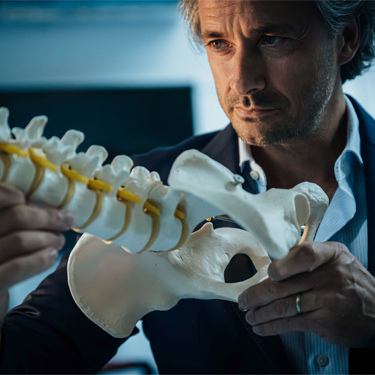
Pioneering neuroscientist and Rolex Awards Laureate Grégoire Courtine has achieved several astounding breakthroughs since the beginning of his career. Now, he has taken his work to the next level with one remarkable patient who he is treating for a more severe injury than ever before.
As a member of the Rolex family, Courtine embodies the values of perseverance, excellence and innovation. With a tenacious spirit and readiness to explore the limits of the possible, Courtine was inspired to dedicate his life’s work to neuroscience after meeting a scientist while climbing – his first passion.
Since then, he has continued to break new boundaries in patients with spinal cord injuries. One year after founding his academic centre, .NeuroRestore, he was named a 2019 Rolex Awards Laureate for his work developing a revolutionary system for patients to regain control over their legs. Together with neurosurgeon Jocelyne Bloch, he designed a “digital bridge” that converts thoughts into action, with one implant in the brain and another in the spinal cord. With time, patience and the exceptional expertise of Courtine and Bloch’s team, the digital bridge proved successful for patients with severe but incomplete spinal cord injury.
“The whole team felt empowered by receiving the Rolex award in 2019. The fact that a jury of experts believed in our work; it energized us. We felt emboldened to push forward, further into the unknown.”
– Grégoire Courtine, Neuroscientist and Rolex Awards Laureate
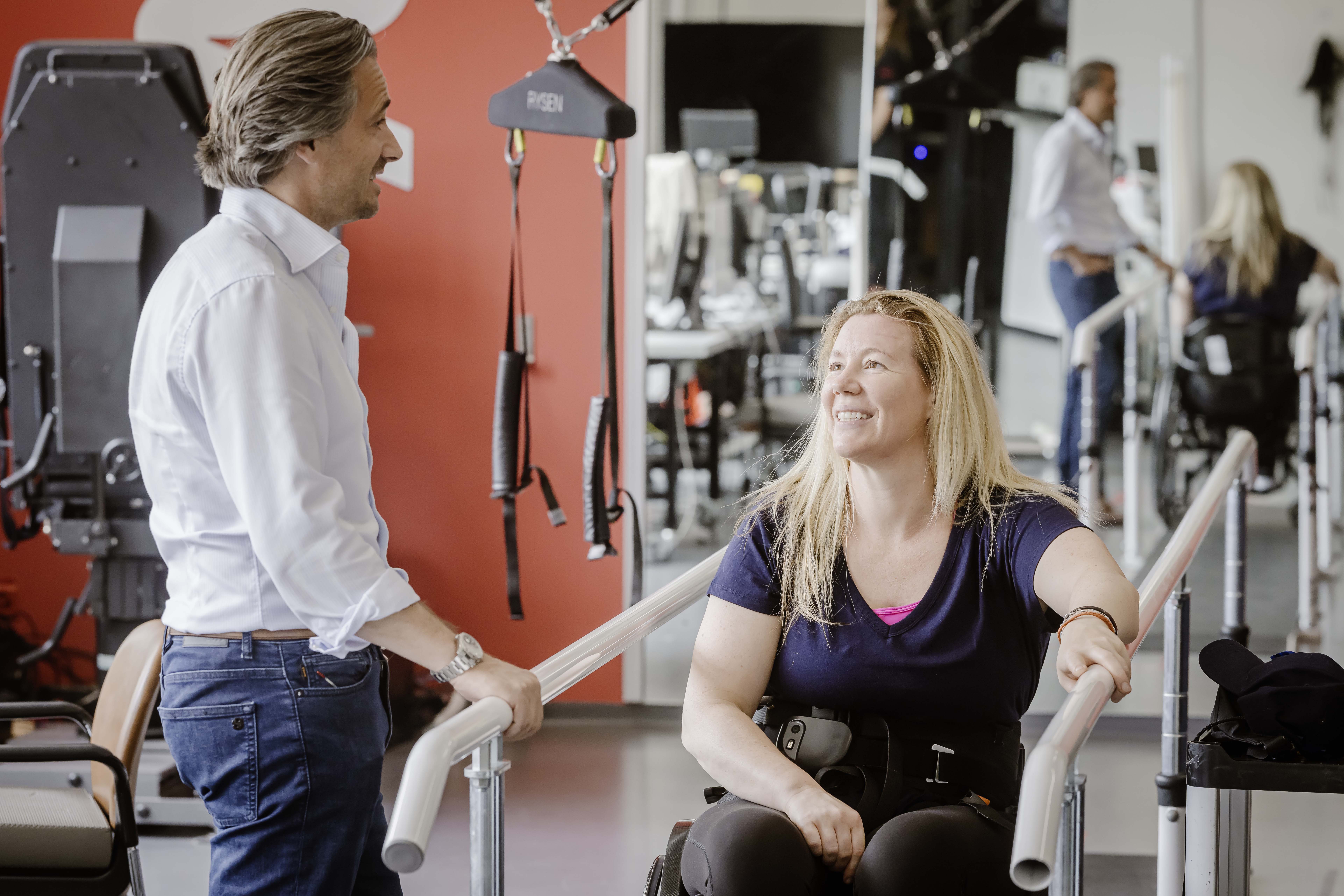
Now, Courtine and Bloch have taken the technology one step further – restoring movement to a patient with a complete spinal fracture, and therefore no feeling in her legs at all. Suzanne Edwards had been paralyzed since falling off a roof 14 years ago. Her consultants told her she would never walk again.
Yet with Courtine’s dedication to driving the technology forwards, Edwards is now taking her first hesitant steps, with the digital bridge taking complete control of her movements. They could not be sure it would work, but, as Courtine says, the role of the scientist is to face the unknown. It was a true accomplishment for the Laureate to witness this patient walk again, more than a decade after she last took a step.
“What was exciting about Suzanne’s operation was that we were able to test a new piece of technology; electrode fields that are much more precise in targeting all the nerve roots that are important for controlling leg muscles. This was crucial for us with Suzanne because she’s our first patient who is completely paralyzed. We really need maximum precision, and the new technology worked wonderfully.”
– Grégoire Courtine, Neuroscientist and Rolex Awards Laureate
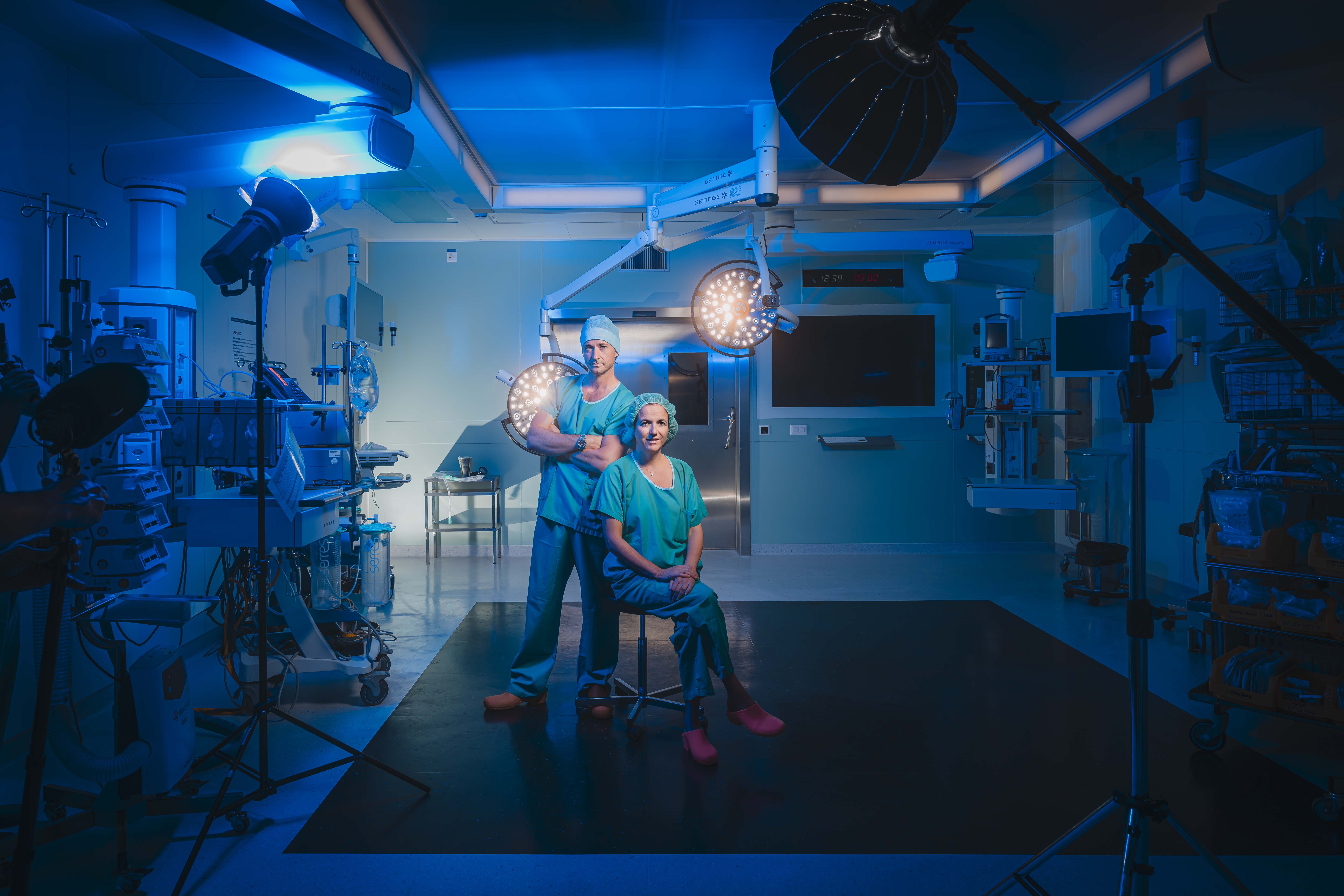
By continuously pushing to achieve more, Courtine and Bloch are proving that their digital bridge can work for patients with increasingly complex spinal injuries. Now, with the support of the Rolex Perpetual Planet Initiative, they have ambitious plans to develop it further to help tetraplegic patients restore upper limb movements and assist those with neurodegenerative disorders such as Parkinson’s disease; potentially improving millions of lives worldwide.
This drive for excellence can be traced back to Courtine’s early years when, as a young physics student, he developed a passion for climbing. After considering becoming a professional in the sport, he met a professor of neuroscience on a climb. They talked about the way the brain controls a climber’s every move and he found his new calling.
As an enthusiastic climber, he was also deeply moved by the people he met who were paralyzed by sports accidents. After completing his PhD, Courtine travelled to Los Angeles to deepen his understanding of the brain, and found himself studying in the UCLA lab, working closely with the Christopher & Dana Reeve Foundation. Listening to Reeve, the Superman actor who was paralyzed after an accident, was a pivotal moment for the young scientist.
“It was really the moment when I decided to invest the rest of my career in developing therapies for people suffering from paralysis.”
– Grégoire Courtine, Neuroscientist and Rolex Awards Laureate
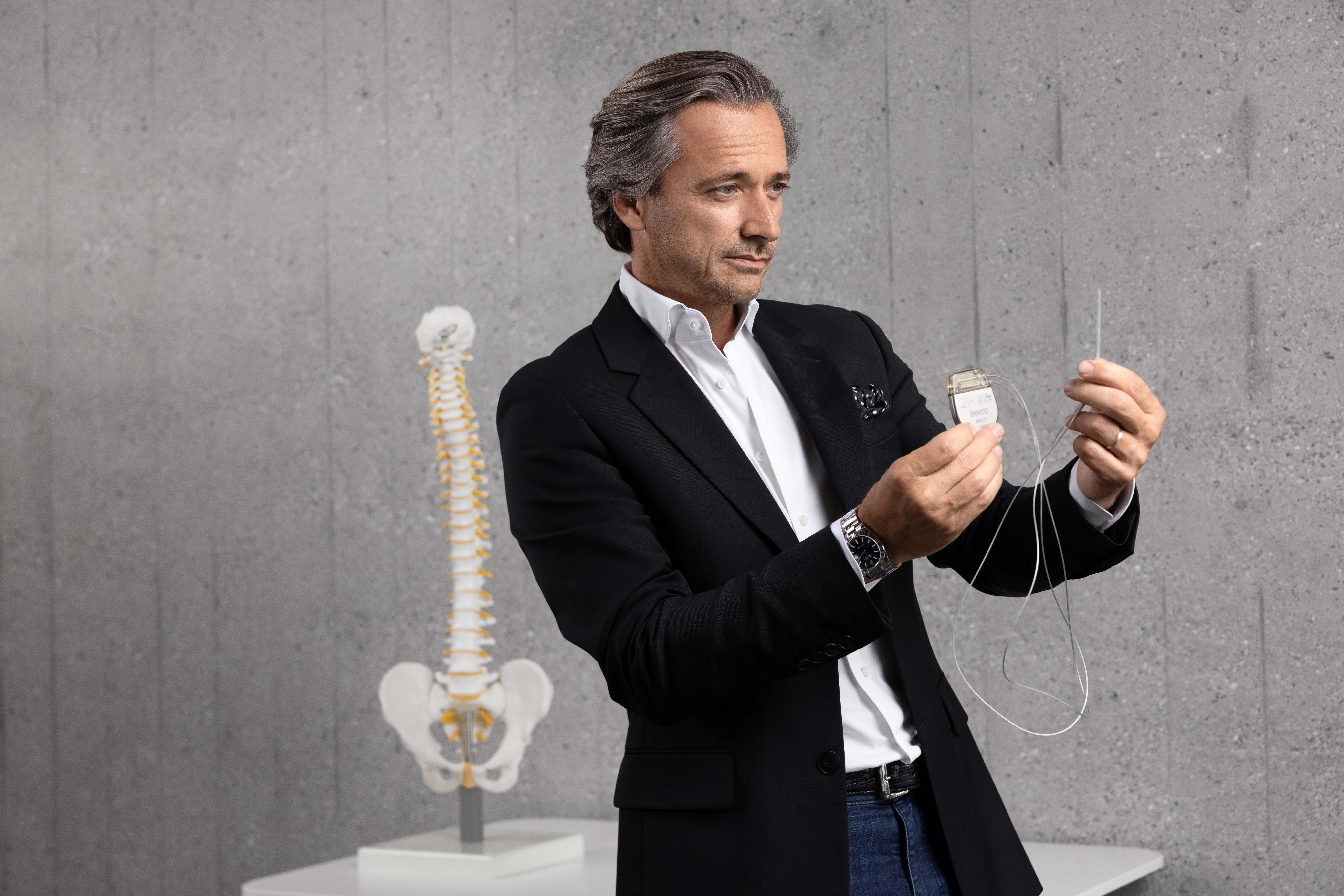
Courtine’s journey was not always straightforward. He recalls the early years when the scientific establishment turned against him, refusing to believe he could overcome paralysis by electrical stimulation. He lost his funding, but he never stopped believing in himself.
Like the pioneering explorers and visionaries Rolex has championed for generations, Courtine is relentlessly striving for more. His work is not merely about curing injury – it is about restoring human dignity and independence.
ABOUT THE PERPETUAL PLANET INITIATIVE
Rolex celebrates human achievement, recognizing journeys marked by milestones and emotions that culminate in defining moments.
For nearly a century, Rolex has supported pioneering explorers to help them achieve countless historic feats. Over time, the company has moved from championing exploration for the sake of discovery to protecting the planet. Through the Perpetual Planet Initiative, Rolex stands alongside those building a better future for all life on earth.
The Rolex Perpetual Planet Initiative was launched in 2019 and now has a portfolio of more than 30 partners, active in three main focus areas: Oceans; Landscapes; and Science, Health, and Technology.
For the Oceans, Rolex supports a wide range of projects such as: Mission Blue and Rolex Testimonee Sylvia Earle; Cristina Mittermeier and Paul Nicklen; and Coral Gardeners.
The Landscapes roster includes: a strengthened partnership with the National Geographic Society; Rewilding Argentina and Rewilding Chile, offspring organisations of Tompkins Conservation; and Steve Boyes and the Great Spine of Africa series of expeditions.
Rolex also supports partners in Science, Health, and Technology, such as: Rolex Awards Laureates Andrew Bastawrous; Felix Brooks-church; and Miranda Wang.
Rolex also supports organizations and initiatives fostering the next generation of explorers, scientists and conservationists, such as the Royal Geographical Society, The Explorers Club, the CERN & Society Foundation and the EPFL (the Swiss Federal Institute of Technology) in Lausanne.